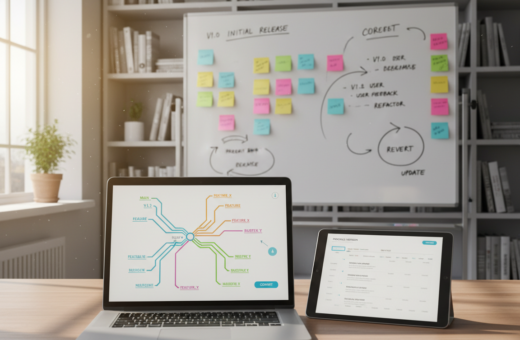
Too many apps can zap mental energy and slow actual output. The modern professional faces a flood of choices each day. Research shows people make roughly 35,000 decisions daily, which fuels decision fatigue and reduces clarity.
This constant decision-making costs time and breaks deep focus. When they spend minutes switching between platforms, they lose momentum on important work. Simple habits and limits can cut friction and restore flow.
Relying on many digital tools often means managing software instead of shaping meaningful content. Each app adds a new point of failure and another tug on attention. A leaner stack helps maintain quality and predictability.
Social media and endless notifications multiply distractions. By filtering incoming data and choosing fewer, trusted apps, one can protect creative momentum and deliver stronger results.
Key takeaways: Limit apps to reduce decision load. Protect blocks of focused time. Prioritize tools that directly support content and quality.
Understanding Productivity Overload for Creators
Decades of research trace how floods of information erode focus and slow meaningful work. Bertram Gross first named this phenomenon in 1964, and Alvin Toffler later amplified it in his 1970 book Future Shock.
Today, roughly one quarter of workers report stress and health problems tied to the sheer volume of data they must process. This pressure shows up in missed deadlines and lower-quality content.
Many in business struggle to separate high-value tasks from trivial busy work. When teams chase every update or company news item, they dilute their ability to deliver measurable value.
- Historic roots: Gross and Toffler framed the problem decades ago.
- Real impact: 25% of employees face stress linked to excessive information.
- Practical harm: Uncurated news and requests steal attention from core tasks.
Simple ways to regain control include filtering incoming requests and prioritizing the work that drives value. By streamlining how they handle data, teams ensure key tasks get the focus they deserve.
“Too much information can paralyze choice and reduce the quality of decisions.”
The Cognitive Cost of Digital Clutter
A cluttered digital workspace exacts a measurable toll on how sharply people judge options. When mental input stacks up, decision quality slips and routine choices become harder.
The Impact on Decision Quality
A 2011 study found that once people reach cognitive and information overload, brain activity drops as if a circuit has popped. That fall in activity leads to poorer choices and slower responses.
The consequences are wide. Interruptions from social media and email force constant context switching. Each switch consumes precious time and mental energy, and the result shows up in lower-quality content and less effective work.
Why Brain Activity Plummets
Researchers estimate the economic cost of this digital clutter at roughly $900 billion per year across industries. The brain was not built to process endless updates and requests every single day.
- Context switching reduces focus and raises mental fatigue.
- High input volume overwhelms limited processing capacity.
- Poor decisions and burnout follow when tasks exceed cognitive limits.
“Reducing digital noise is a necessary step to protect cognitive health and sustain long-term performance.”
Strategies to Streamline Your Creative Workflow
Small, deliberate choices about tools and habits can reclaim hours that are otherwise lost to switching costs. The goal is to reduce friction so teams spend more time on high-value work.
Adopting the Minimum Effective Dose
Use the Minimum Effective Dose (MED)—select the smallest effort that delivers the desired result. Tim Ferriss popularized this idea in The 4-Hour Body.
This approach trims unnecessary steps and keeps content efforts focused on impact rather than volume.
Mastering the Art of Batching
Group similar tasks to limit context switches during the day. Batching reduces mental wear and speeds completion of routine tasks.
Try theme days—such as a Monday dedicated to content—to build momentum and preserve deep work blocks.
Managing Interruptions with Visual Cues
Adopt simple signals to protect focus. Business psychologist Dionne Mahaffey recommends visible cues like a green hat to show when someone is busy.
Other practical ways include setting strict time limits on information gathering and scheduling set times to check industry news.
- Select a compact set of tools that directly support core tasks to cut lost time.
- Use timed sessions to prevent rabbit holes that add little value.
- Combine MED, batching, and visual cues to regain control of tasks and the workday.
“Reduce input and design your day around the outcomes that matter most.”
Conclusion: Reclaiming Your Creative Focus
True creative work needs deliberate space, not constant activity. Quiet moments let insight surface and help teams make better choices about what to do next.
Maura Thomas notes that attention, not hours, drives invention. By saying no to podcasts, social feeds, and unnecessary alerts, people free mental room to solve hard problems.
Working smarter does not mean longer days. Use simple rules and a compact toolset to protect deep time. Explore practical ways to guard focus, finish tasks, and create higher-quality content with less friction.